01
Bayesian inference
Turning noisy detector data into astrophysics: Bayesian inference, model selection, transdimensional inference, and neural posterior estimation.
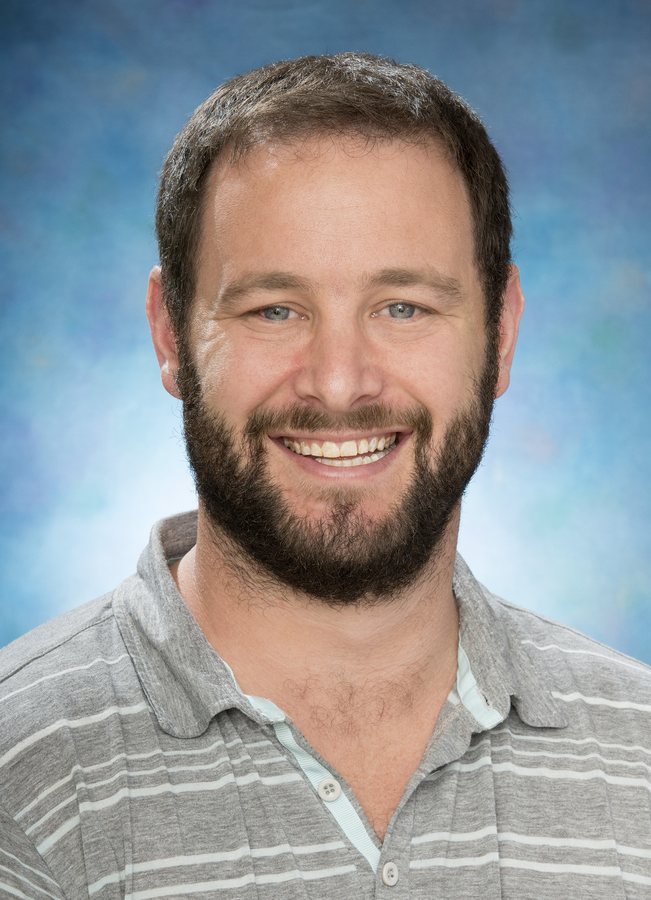
Currently: Visiting Professor at UBC
Professor, School of Physics and Astronomy
Monash University · Melbourne, Australia
I’m a gravitational-wave astrophysicist. I use ripples in spacetime — from colliding black holes and neutron stars — to study the most extreme physics in the Universe: how matter behaves at nuclear densities, how black holes form and pair up, and whether Einstein’s general relativity holds in the strong-field regime. I'm the Deputy Chair of the Board of Astronomy Australia Limited, and I’m Monash node leader in OzGrav, the ARC Centre of Excellence for Gravitational Wave Discovery.
Simulated binary
h(t), illustrative
01News
Talks, papers and milestones, most recent first.
All newsPinchbeck, Thrane, Balazs & Lasky, BilbyFlow: user-friendly neural posterior estimation for gravitational-wave astronomy. Accepted to ApJS. arXiv:2609.00766
Cheung (group member), Udall, Davis, Lasky & Thrane, Joint inference for gravitational-wave signal and noise glitch: Method and application. Accepted to PRD. arXiv:2607.09111
This week I'm visiting CITA at the University of Toronto, Canada.
Curyło, Thrane, Lasky & Gaynor, A Comprehensive Framework for Phase-coherent Mapping of the Gravitational-wave Sky with Pulsar Timing Arrays. Published in ApJ 1009, 166. arXiv:2604.19073
I gave an invited Physics Colloquium presentation to the group at Washington State University today. My talk was entitled: "Gravitational-wave discovery: past, present and future".
I'm visiting Washington State University this week, being hosted by Prof. Sukanta Bose and his group in the beautiful city of Pullman, Washington.
I gave the Physics and Astronomy Colloquium today at the University of British Columbia. My talk was entitled: 'Gravitational-wave discovery: past, present and future'.
Pinchbeck, Thrane, Balazs & Lasky, BilbyFlow: user-friendly neural posterior estimation for gravitational-wave astronomy. Submitted to ApJ. arXiv:2609.00766
Huge congratulations to both Christian Adamcewicz and Shun Cheung who both submitted their PhD theses today. Both Christian and Shun were co-supervised by myself and Eric Thrane.
Guttman (group member), Baker, Lasky & Thrane, Licence to Bin: Accurate and Scalable Inference for Binary Neutron Stars in Next-Generation Gravitational-Wave Detectors. Accepted to PRD. arXiv:2606.14197
02Research
Turning noisy detector data into astrophysics: Bayesian inference, model selection, transdimensional inference, and neural posterior estimation.
What gravitational-wave catalogues reveal about how binary black holes form, including distinct subpopulations at different masses.
Post-merger signals, equations of state, magnetars behind short gamma-ray bursts, and continuous waves from spinning neutron stars.
The permanent deformation of spacetime left behind by a passing wave, and how LIGO–Virgo–KAGRA can detect it.
Probing Einstein’s theory in the strong-field regime, from tests of the no-hair theorem to extra polarisations and modified gravity.
Nanohertz gravitational waves from supermassive black-hole binaries, and phase-coherent maps of the gravitational-wave sky.
03Explore
Small interactive toys for students, the curious public and colleagues.
Pick two masses and listen to the gravitational-wave signal they’d make as they merge.
There’s a signal hidden in this noise. Tune the parameters until the model fits, and watch the likelihood respond.
From the cosmic microwave background to LIGO: more than twenty decades of frequency, and what lives at each.
04Publications
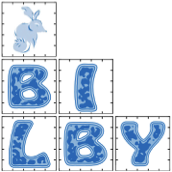 Most cited
1,362citations
Current group member
All publications05Group
Current postdocs and students, plus 26 alumni now in positions around the world.
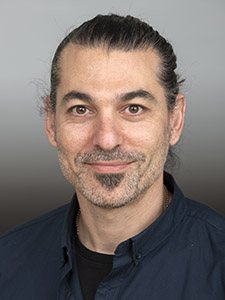
Nir Guttman
Postdoc

Gosia Curylo
Postdoc
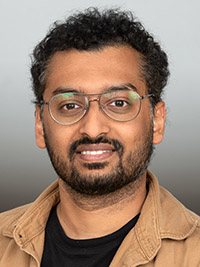
Sharan Banagiri
Postdoc
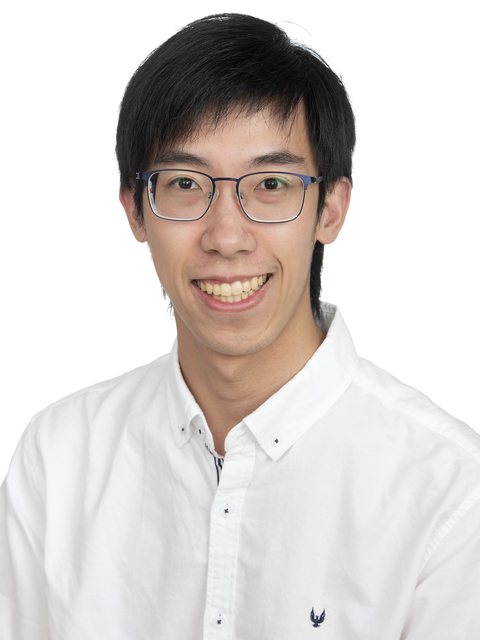
Shun Cheung
PhD student
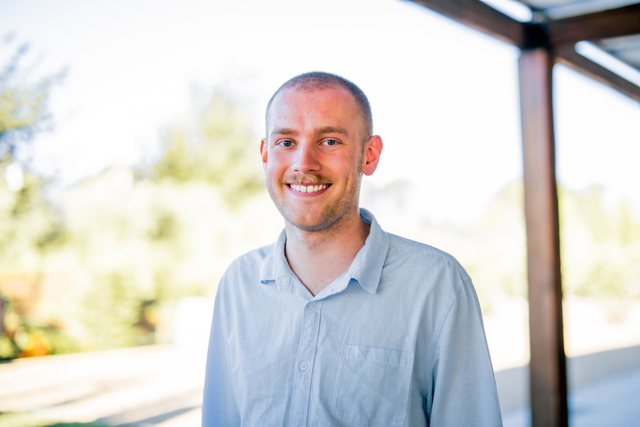
Christian Adamcewicz
PhD student
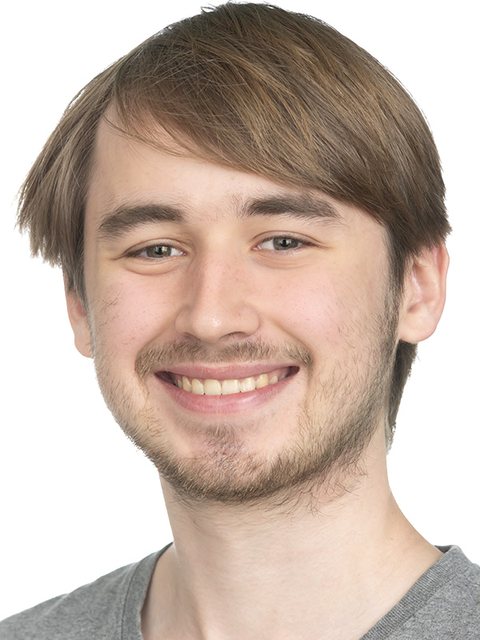
Lachlan Passenger
PhD student
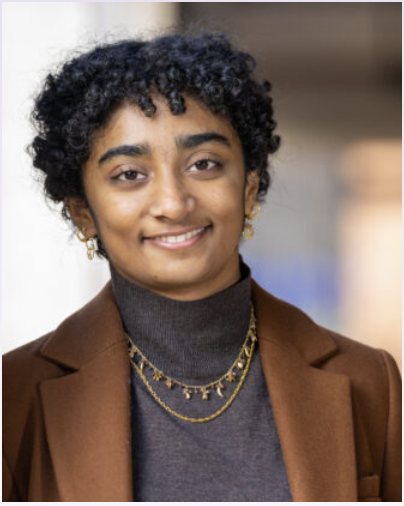
Mallika Sinha
PhD student
Emma Sapkin
PhD student
Ella Martin
Honours
Alumni
Now in positions around the world
Meet the group →